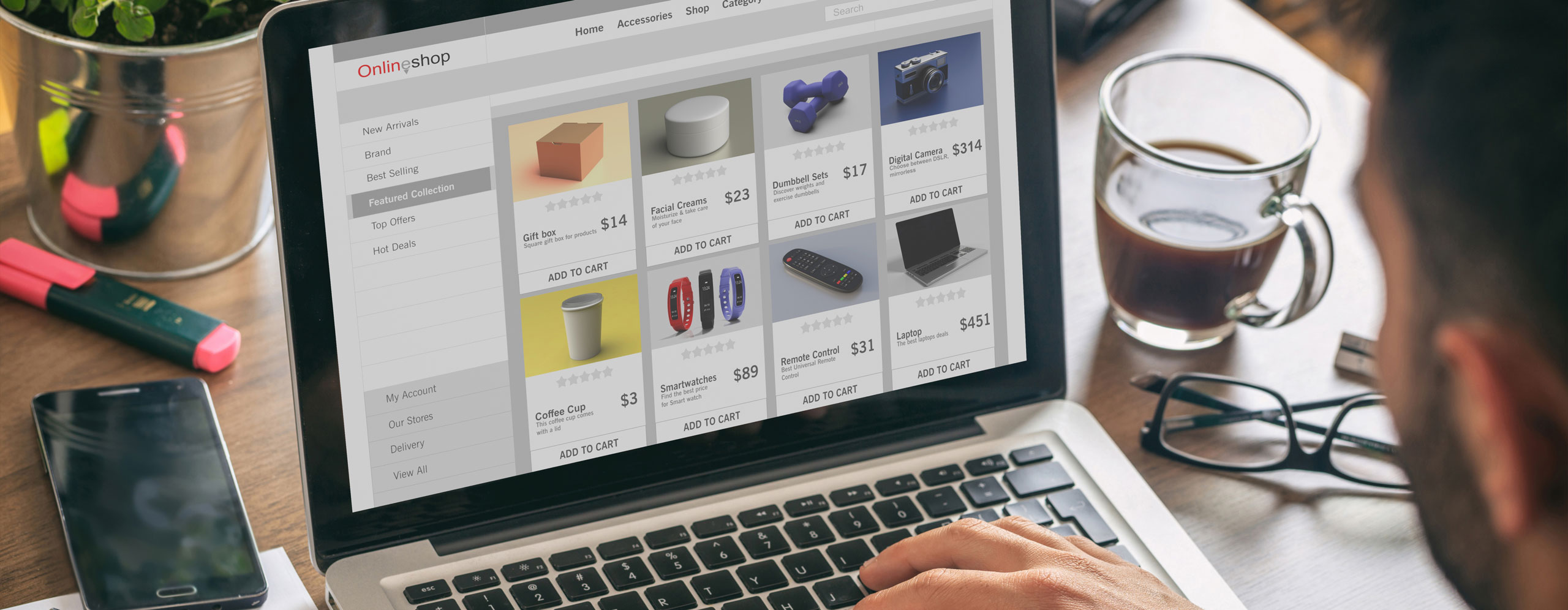
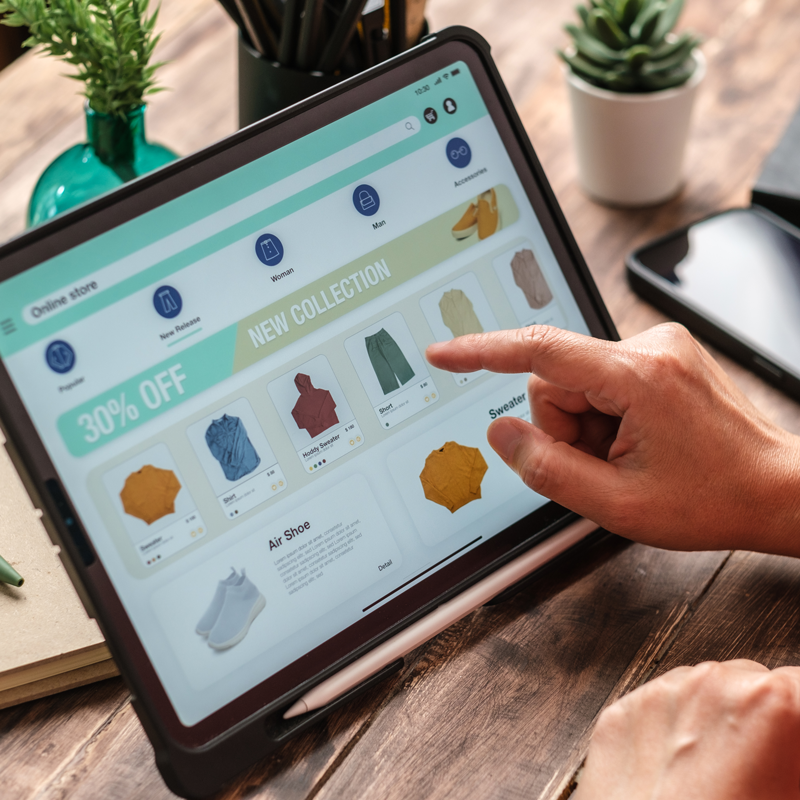
Are your products poorly cataloged?

Good product information drives sales, but your company's catalog is a mess. Uploading products is slow, repetitive, and publishing across different channels feels like hell.

Your team loses time and energy, and
your eCommerce isn't taking off as it should.

Product Information Management

We are experts in product cataloging

Full-time PIM experts.

We have our own methodology, a specialized team, and experience with the most complex catalogs.

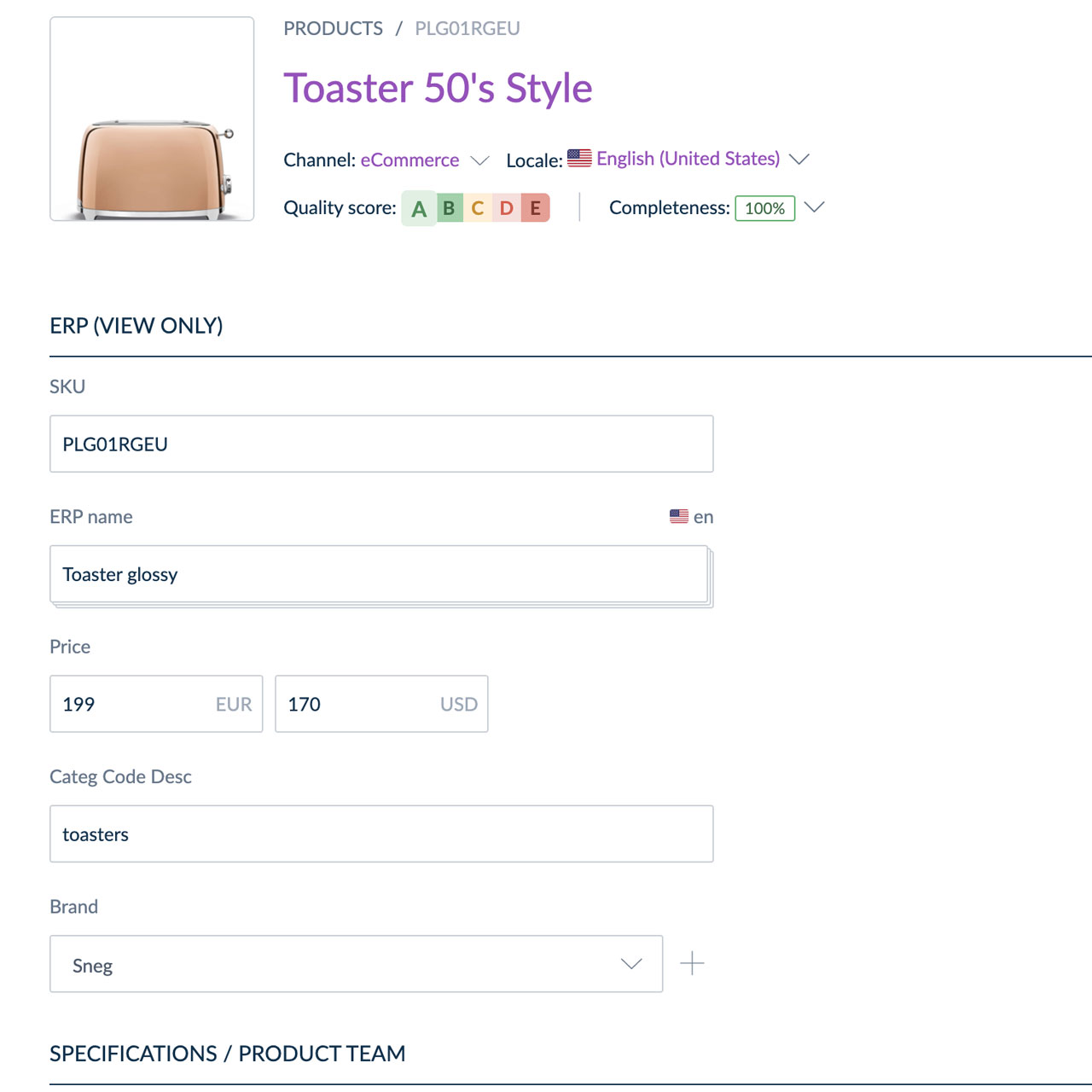
We guide you through the process of choosing your PIM tool, cleanse your data, and launch your catalog integrated into your digital ecosystem.

We specialize in creating ecosystems around the catalog, integrating your PIM solution with your ERP, POS, eCommerce, and various marketplaces.

We organize all your product information, creating the necessary categories and subcategories, and every attribute needed for your products to look complete wherever your customer sees them.

0 Millions

of SKUs cataloged

0 +

Categories

0 +

Product Attributes

0 +

Integrations

CRITERIA Framework

From chaos to success,
in 6 steps

Our implementation methodology guides you step-by-step.

  • 1. Insight
  • 2. Design
  • 3. Build
  • 4. Execute
  • 5. Delivery
  • 6. Optimize
Request a demo, no obligation

Start your new catalog today

Do you want to leave chaos behind and turn your catalog into a competitive advantage?

  • No more messy catalogs
  • No more scattered information
  • Reduce manual processes
Achieve catalog success

All your products
well organized

Improve your customers' brand experience.

  • Publish faster across all channels
  • Scale your sales efficiently
  • Keep your team aligned and motivated
Integrations with ERP and eCommerce

We integrate your PIM with your current ecosystem

A PIM system is designed to complement other existing tools within your tech stack.

Testimonials

What our clients say

Learn about their experience after hiring the services
of CRITERIA Smart Cataloging.

«We had absolute support and comprehensive guidance. The truth is that they left us with excellent knowledge, structure, and the success of the implementation was thanks to that.»

Iván Garza Tijerina

GAFI | Hardware Division

«The journey we've had with CRITERIA has been formidable, from the attention to the follow-up. And above all, the support we receive always feels like a school, an academy.»

Dámaris Rivera

FOREM | eCommerce

«When I think about the digital ecosystem for an SME like ours, I look for any provider to join us in our company philosophy, and CRITERIA met all those objectives and more.»

Yair Levy Wald

WALD | Transformation Leader

Frequently Asked Questions

What is a PIM? What is it for?

The answers to all your questions about organizing your catalog in a PIM.

Implementing a PIM centralizes and improves product data quality, creating a single source of truth accessible to all departments. This ensures that information is always updated and consistent across all channels, preventing confusion or contradictory data that can frustrate customers.

A PIM system is designed to complement your existing tools (such as ERP, eCommerce platforms, inventory systems, etc.), not replace them. In fact, it's common to use PIM and ERP together: the PIM handles the detail and quality of product information (rich descriptions, attributes, digital media) while the ERP manages transactions and commercial operations.


The cost of implementing a PIM varies depending on the scope of the project and your company's needs. Factors such as the number of users, the quantity of products and attributes to manage, the current quality and location of your data, the required integrations, and whether you opt for a SaaS (cloud) or on-premise solution will influence the budget. The ROI of a PIM is evident in increased revenue and reduced error costs, so, when well-implemented, the system ultimately pays for itself in the short to medium term.

Testimonials

Learn about the experience of our clients

They share their experience working with CRITERIA Smart Cataloging.

Noonica (ES)

Noonica is a startup located in Ibiza, Spain, that helps developers market homes to foreign investors in premium tourist destinations. They faced the need to digitize the entire pre-sale and post-sale process and the challenge of having a tool to centralize their product information, which was precariously managed in unprofessional services like Google Drive.

Gilsa (MX)

GILSA is a Mexican company with over 40 years of experience providing comprehensive solutions in the field of decorative construction. Their product portfolio includes nearly 15,000 items. They came to CRITERIA with the goal of solving product cataloging problems within the framework of updating and re-implementing their Akeneo PIM system.

Wald (AR)

Wald S.A. is an Argentine company specializing in the creation and distribution of innovative products in the outdoor, fishing, and container sectors. Recognized for its commitment to quality and functionality, Wald faced the challenge of managing dispersed product data, which complicated access to accurate and updated information.

GAFI (MX)

GAFI Ferroeléctrico is a wholesale distributor of hardware and construction items. It has a product catalog of over 15,000 references. It is one of the most important hardware distributors in Mexico. The challenge was to centralize and manage large volumes of product information, creating hundreds of attributes and field families. It was necessary to design a PIM implementation (Akeneo Community) that could supply various channels with common and specific information for each case. Primarily, to feed product information to the website and the printed catalog, with different requirements.

Grifería FV (AR)

Grifería FV is a manufacturer of high-tech faucets, sanitary ware, furniture, and accessories for bathrooms and kitchens. This market-leading Argentine company manages nearly 10,000 references, including products and spare parts. FV’s challenge was to solve the problems of decentralized product information, updating said information, and integrating each of the areas responsible for generating data: engineering, product, marketing, eCommerce, etc., and delivering information to its own channels (WooCommerce) and third-party channels (Producteca/Mercado Libre), considering information from its ERP (SAP).

Grupo Forem (MX)

Grupo Forem is a prominent Mexican conglomerate in the manufacturing and industrial transformation sector, with a presence in Mexico, Central America, and the Caribbean. Composed of six companies specializing in the commercialization and implementation of industrial machinery and equipment, as well as technical consulting, it faces a significant challenge: the lack of a centralized source of technical and commercial information. This made it difficult to monitor and standardize data for approximately 12,000 products from over 20 suppliers and organized into nearly 300 categories.

Risoul (MX)

Risoul is a leading company in the Mexican industrial market, specializing in automation equipment and components, electrical equipment, and industrial networks. Since its founding in 1973, Risoul has focused on providing effective solutions with over 40 commercial partners. The wide diversity of its portfolio, which includes highly specialized products, resulted in information dispersion across multiple unconsolidated systems.

FEGIME LATAM

FEGIME LATAM is an international network of distributors specializing in electrical materials that brings together leading companies in the sector across various Latin American countries. Its collaborative model allows associates to share standards, best practices, and common strategies, while maintaining the independence of each company. With a strong focus on channel professionalization, operational efficiency, and product information quality, FEGIME LATAM promotes the adoption of standardized data models and digital solutions that facilitate integration with manufacturers, the management of complex catalogs, and the development of B2B e-commerce in the region.

Coflex (MX)

Coflex is a leading Mexican company in the design, manufacturing, and commercialization of plumbing solutions, with a trajectory initiated in 1989 and a strong presence in the Mexican and American markets. Its catalog includes lines for water, gas, sinks, faucets, toilets, drainage, filtration, and piping systems, among other solutions aimed at facilitating the work of distributors, installers, and end-users.